
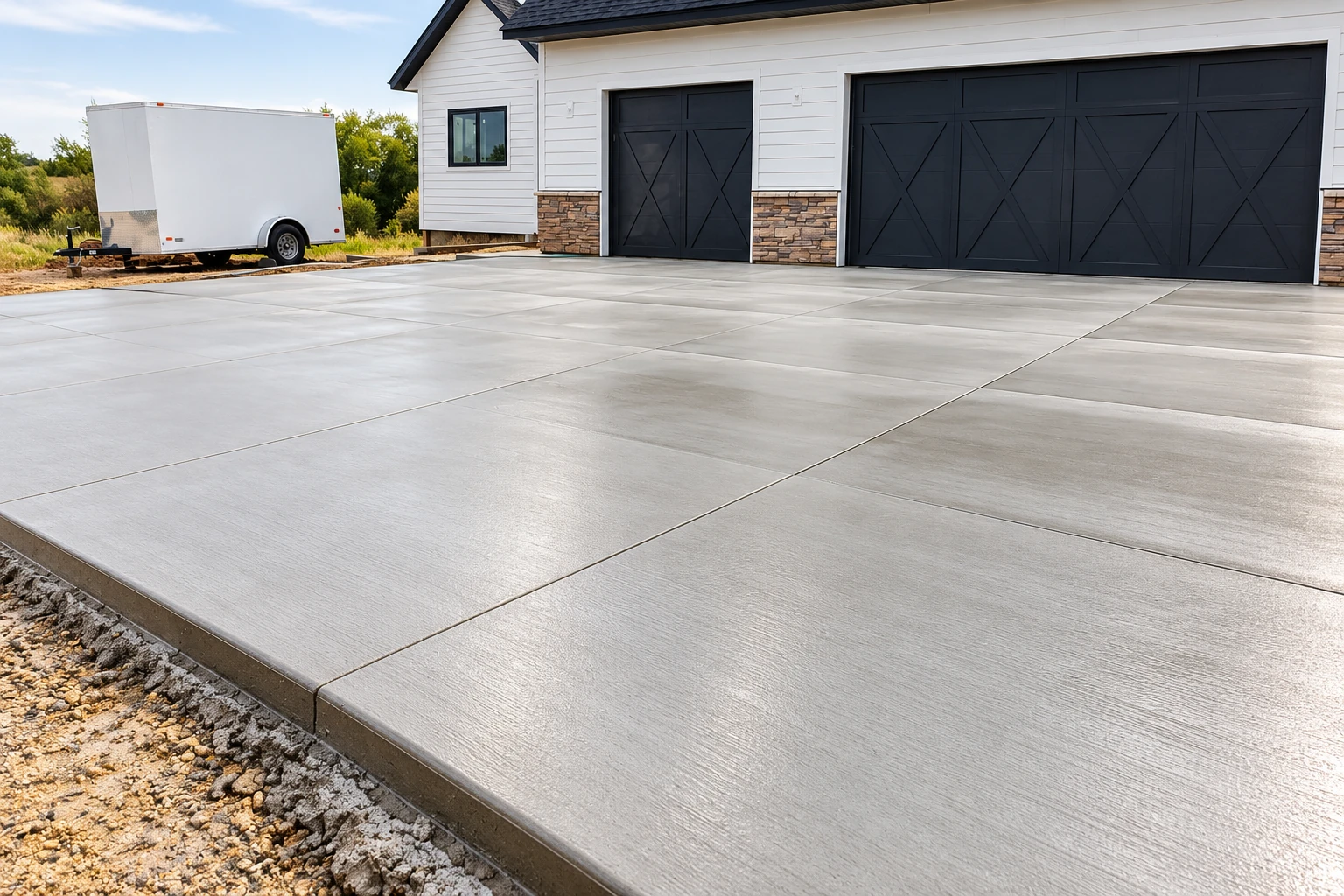
Garage floor concrete in Pittsburg CA - a solid, level floor ready for your car
Cracked, sunken or dusty garage floor? We dig out, pack the base and pour a new slab built to carry your car.
- Fully licensed and insured.
- Free on-site estimates.
- Expect a reply within 1 business day.
What goes into a new garage floor in Pittsburg?
The short answer: Garage floor concrete in Pittsburg, CA means replacing or pouring the slab your car, workbench and storage sit on, so you end up with a solid, even floor instead of one that's cracked, sunk or crumbling. We form the edges, prep the ground, pour, finish and cut the joints, and most of the wait after that is the concrete curing, not us working.
Most people call when the old floor has gotten bad enough to trip on, or when they don't like the way the car sits on it anymore. We're based in Pittsburg and take jobs in the cities around it, so call even if your city isn't on our list. The price moves with the size of the garage, whether the old slab has to be broken out and hauled off, what the ground under it looks like and how thick and reinforced the new floor needs to be. The schedule turns mostly on the tear-out, the weather on pour day and the cure time before you can park again, and I'll put your own numbers in a written estimate once I've seen the garage.
How do you know your garage floor needs replacing?
Cracks that keep growing
A hairline crack is normal, but one that keeps widening, or where one side sits higher than the other, usually means the ground under the slab has moved. Left alone, the edges chip, water gets underneath and the repair gets bigger.
Floor sinking by the door
A low spot or a tilt near the garage door, right where the car rolls in, usually points to a base that settled because it was never packed well. The longer it goes, the bigger the step gets and the more the slab breaks up around it.
Dusty, flaking surface
If the top layer turns to powder or peels off in flakes, the slab was often finished wrong or dried out too fast on pour day. It won't fix itself, and the wear spreads every time you sweep or drive over it.
How we pour garage floor concrete
First I look at what's there, because an old slab can hide old patches, buried lines or a soft spot nobody mentioned. If the floor is coming out, we cut it, break it up, haul it off and dig down to firm ground. Then we pack the subgrade, the soil and gravel the slab sits on, in layers, since a base that's only raked level settles with the dirt and takes the floor down with it. We set forms, place rebar if the job calls for it, which is steel that holds the slab together if it cracks, and pour early in the day so the top doesn't dry out in the afternoon heat and turn weak and dusty later. After finishing, we cut control joints, shallow grooves that give the slab a straight line to crack along, and we plan where they go so any cracks have a place to form. Then the concrete cures, which is the slow hardening it needs time for before it takes weight. If you're trimming the budget, cut the fancy finish before you cut the base, because you'll never see the base again but you'll live with what it does.
Some garage jobs connect to other work. If you want color, a pattern or a different texture instead of plain gray, we can talk about decorative concrete for the floor or the apron outside the door. And when the garage sits into a slope and the soil beside the driveway needs holding back, we build concrete retaining walls as part of the same plan.
Plain slab, broom finish
A broom finish drags a stiff broom across the wet concrete for a light texture, so tires and shoes grip when the floor is wet or dusty. It suits most garages that hold a car and some storage, and it's the simplest way to do the job.
Reinforced slab with rebar
Steel in the slab adds to the cost, but it keeps the pieces from drifting apart if the floor cracks. It suits heavy trucks, a shop with heavy tools or ground I think is likely to move.
What happens after you call about your garage floor?
Here's how a garage floor goes with us, from your first call to the day the car goes back in. I'm the one you'll see at the estimate and on the job.
- Step 01
Call or send the form
Tell us roughly how big the garage is and what's wrong with the floor, and send photos if you have them. We call you back to set a time for me to come out.
- Step 02
I look it over and estimate
I walk the garage with you, check the slab and the ground around it, and ask a lot of questions about how you use the space. You get a written estimate that says what's in it and what isn't, so the price is settled before anything gets broken out.
- Step 03
We pour, clean up, walk it
I run the job with our crew, and I'll tell you when you can walk on the floor and when the car can go back in so you can plan around it. At the end we clean up and walk the finished floor with you.
Who can pour garage floor concrete in Pittsburg
In California, the state licensing board sets a concrete contractor classification for work that forms, pours, places and finishes flat concrete, which is exactly what a garage floor is. The state does let someone without a license take on small jobs, but only when the job is $1,000 or less, needs no permit and they have no one working for them on it. A garage slab with a crew on it doesn't fit that, so ask anyone who quotes your floor for their license before they start.
Around Pittsburg we see a lot of garages with the original slab, often cracked across the middle and low near the door where the car turns in. We see the same floors on jobs in Antioch and Concord, and the fix starts in the same place, under the slab.
Get a free on-site estimate for your garage floor
Send the form and we'll get back to you within one business day to set a time for me to come out and look at the floor. The estimate is free, and there's no obligation and no pressure to book.
Why Pittsburg homeowners call C&K Pittsburg Concrete Company
The owner writes your estimate
I come out to look at your garage and write the estimate myself, then run the work alongside our crew. The person who heard what you want is the one on site when it's poured.
In business since 2021
We've been at this since 2021, and we're best known for the jobs with a puzzle in them, like cutting into an old slab or raising a house. A garage floor with a soft spot or an old patch underneath is that kind of job.
Fully licensed and insured
We're fully licensed and insured. That matters when a crew is breaking out concrete a few feet from your house.
We check trees by your garage
Roots from trees and big plants next to a building pull moisture out of the soil under the slab, and that makes cracks worse. I look for them on the first visit and tell you what they mean for your floor.
When you're ready, call (925) 318-8157 or send us a note through our contact page with your garage size.
Garage floor questions we hear in Pittsburg
How much does a new concrete garage floor cost in California?
A standard 4-inch concrete slab with materials, labor and a basic broom finish usually runs about $9 to $18 per square foot in California. That's the going range across the state, not our price, and tearing out an old floor, a thicker slab or added rebar can push a job toward the top of it. Your estimate gives the figure for your garage.
How long does it take before I can park in my garage after a new floor is poured?
Plan on about a week before the car goes back in. One guide says a new slab should be walkable within 48 hours and suggests waiting a week before heavier loads, while full curing takes about a month.
Will my new garage floor crack?
Some cracking is normal, even in a well-built floor. Concrete floor guidance says getting rid of cracking and curling completely isn't realistic, even with the best design and building methods, so some of both should be expected in any new floor. Curling is the edges of a section lifting slightly as the slab dries, and the joints we plan, covered above, give the cracks that do come a place to land.
What causes a concrete garage floor to sink or shift?
Most often it's the ground underneath, either a base that was never packed or soil that moves. Where the ground is expansive soil, clay that swells when wet and shrinks when dry, a regular slab on the ground can move unevenly, so on that kind of ground you should plan for some shifting over time. If I see signs of it at your house, I'll tell you what that means for the new floor.
How thick should a garage floor slab be?
Usually 4 to 6 inches. One Bay Area guide puts home floor slabs in that range, with garage slabs at the thicker end. We settle the thickness for your floor at the estimate, based on what you park and store on it.
What should I ask a contractor before they pour my garage floor?
Ask where the joints will go and how the base will be prepared. A national concrete standard requires contraction joints, the cut lines that control cracking, in slabs on the ground, so a good contractor should have an answer ready. Ask too whether the old slab comes out and who hauls it away.
Other concrete work around your garage
Decorative concrete
If the apron or a side path should look like more than plain gray, color, stamping and texture can tie new concrete to your house and yard.
Concrete retaining walls
When your driveway or garage cuts into a hillside, a concrete wall holds the soil back so it stops washing down onto the slab.
Send your garage size and a few photos
Call (925) 318-8157 or use the form, and a few photos of the old floor let me show up already knowing what questions to ask.