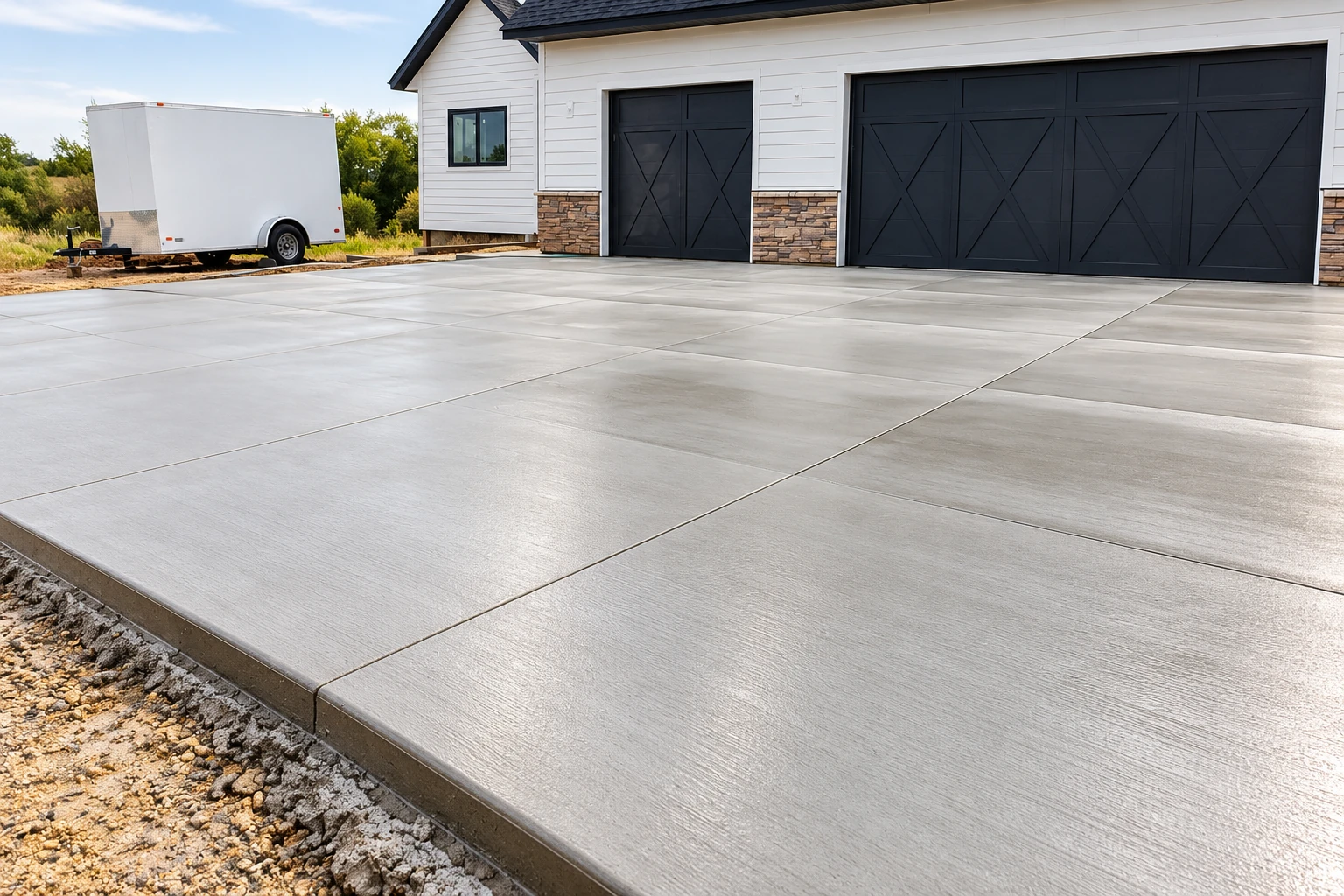
Concrete floor installation in Pittsburg CA - a slab ready for tile, wood or carpet
Old floor cracked, uneven or lifting your tile? We pour a concrete floor that's flat, jointed and cured for what goes on top.
- Fully licensed and insured.
- Free on-site estimates.
- Expect a reply within 1 business day.
What does a new concrete floor in Pittsburg involve?
The short answer: Concrete floor installation in Pittsburg means we pour a new slab, then finish it, cut its joints and let it cure, so it can stay bare with a coating or carry the carpet, tile or wood you put on top. The pour itself goes quickly. Most of the wait is the cure before you can use the floor.
Most of our floor calls come from people turning a garage, addition, shed or shop into space they can use, or replacing a tired slab in a rental. The price moves with the size of the floor, how much digging and base work the ground needs, whether an old slab has to come out first, and what barrier and finish your covering calls for. The schedule turns mostly on getting into the space and on the cure before flooring goes down, so after I look at your space I write an estimate that spells out what's in it and what isn't.
How do you know it's time for a new concrete floor?
Flooring lifting or stained
When tile pops loose, wood cups or carpet smells musty over an old slab, it usually means moisture is coming up through the concrete and into the glue. New flooring over that same slab tends to go the same way, so it pays to look at the slab before you buy flooring.
Cracks and uneven spots
Cracks running across the room, or high and low spots you can feel underfoot, usually point to a base that's settled or joints that were never cut where they belonged. The longer you wait, the more those cracks show through tile or thin flooring and the more they catch toes.
Dusty, worn surface
A floor that leaves gray powder on the broom or wears into paths was usually finished at the wrong moment or cured too fast, which leaves a weak top layer. It keeps wearing, and coatings don't hold well on it, so patching usually buys only a little time.
How we handle concrete floor installation
My first question is what's going on top of the new floor, because a bare floor and one under wood, tile or carpet get planned differently from day one. We dig out and pack the subgrade, the ground the slab sits on, so it doesn't settle with the dirt later, and we check where water runs before the forms go in. If it's getting wood, tile or carpet, we plan the barrier under the slab and the cure around that covering, then set the steel the job calls for, such as rebar, the steel bars that hold a slab together. We pour early in the day so heat doesn't rush the top. Then we finish the surface and cut control joints on time so cracks have a straight line to follow instead of wandering. Last, we let it cure, which is the slow wait while the concrete gains strength. If the budget has to come down, I'll trim the finish before I touch the base, because the base is buried on day one and it's what decides whether the floor stays flat.
A new floor usually ties into the rest of the property. Where it meets a doorway with a drop, we can plan concrete steps construction along with it so the heights work out. If the project carries on out to the backyard, we also build concrete pool decks.
Bare floor with a coating
This suits garages, shops, storage rooms and rentals, where you want a hard surface that sweeps clean and takes traffic. Because the concrete is the finished floor, the finishing and the cure count for more, and the coating goes on once the slab is ready for it.
Slab under tile, wood or carpet
This suits living space, additions and conversions where flooring goes down later. The barrier under the slab and the cure come first here, and we plan the timing so your flooring installer isn't laying over a slab that isn't ready.
What happens after you call us about a concrete floor?
Here's how a floor job runs with us, from your first call to the final walk-through. I'm involved at every step, and I'll tell you in plain words what's happening and why.
- Step 01
Call or send the form
You reach us by phone or the form, and we set a time to come look. It helps to have the floor size in square feet, what's going on top and your timeline handy.
- Step 02
I look the space over
I come out, check the ground, the access and any old slab, and ask a lot of questions before anything gets priced. You get a written estimate that says what's included and what isn't, so you're not guessing about what you're paying for.
- Step 03
We pour and cure your floor
If you go ahead, I run the job alongside our crew, from the base work through the pour, joints and cure. I'll keep you posted on what's happening and when the floor can take foot traffic.
- Step 04
We clean up and walk it
When the work's done, we clean up and walk the new floor with you. I'll show you where the joints run and what to hold off on while the slab keeps curing.
Concrete floor installation in Pittsburg and nearby cities
California's licensing rules decide who can pour your floor. Under the state licensing board's rules, an unlicensed person can take on a job only up to $1,000, and only when it needs no permit and they don't employ anyone on it. If a general builder takes on a concrete-only job, the state says they need the concrete license themselves or a licensed specialty contractor to do the work, so it's fair to ask who's actually pouring your floor. Permit rules differ from city to city, so we check with the local building office early in planning and walk you through what they tell us. When a permit is needed, we take care of pulling it.
We're based in Pittsburg and take jobs in the cities around it, so call even if yours isn't listed here. Around here we pour floors for garage conversions, additions, shops and rentals, and we do the same work on jobs in Antioch and Bay Point.
Get a free estimate for your new concrete floor
We'll get back to you within one business day to set a time, then I come out, look the space over and write up a free estimate that spells out what's included. There's no pressure to book.
Why Pittsburg homeowners call C&K Pittsburg Concrete Company
I write your estimate myself
I come out to look at your floor and write the estimate myself, then run the work alongside our crew. You're talking to the person who'll be on site the day we pour, not passing messages through a salesperson.
Solving tricky jobs since 2021
I learned the trade as a helper on a small crew and started this business in 2021, and we're best known for jobs with a puzzle in them, like cutting into an old slab. That habit of asking questions first matters on a floor, where the parts that count end up buried.
Licensed in California and insured
We're fully licensed and insured. With the state limiting who can take on work without a license, that's the first thing to confirm before anyone pours your floor.
On a floor, what's under the concrete matters as much as the top, so tell me what's going on it when you contact us, and I'll plan from there.
Concrete floor questions from Pittsburg homeowners
How much does a new concrete floor cost in Pittsburg, CA?
A concrete slab in the Bay Area usually costs about $8 to $16 per square foot. That's the going range for slab work in general, not our price. Where your floor lands depends on its size, the base work, whether an old slab comes out first, and the barrier and finish your covering needs, and your written estimate spells out what's included.
Will my new concrete floor crack?
No slab can be kept completely free of cracks, but well-planned joints control where cracking shows up and keep cracks small. Wire mesh won't stop cracking, though it tends to keep cracks and joints from opening up. Fibers mixed into the concrete reduce cracking but don't add structural strength. Ask me where the joints will run, and I'll show you at the estimate visit.
How long does it take before I can walk on a new concrete floor?
You should be able to walk on it within 48 hours, though concrete takes 28 to 30 days to fully cure. Waiting about a week before heavier loads may be safer, so plan furniture moves and flooring work around that.
Do I need a moisture barrier under tile or wood flooring on a concrete slab?
Yes. A slab that'll be covered with carpet, tile, wood or resilient flooring needs protection from moisture rising from below. Water vapor coming up through the concrete can break down flooring adhesives, so the floor may lift, warp or discolor, and mold and odors can follow. A barrier placed right against the slab gives the most protection. Ordinary plastic sheeting has been used in the past, but it falls short as protection under a slab.
What causes a concrete floor to get dusty or wear out fast?
Poor timing during finishing, jointing and curing is the usual cause. When that timing is off, a floor can crack, turn dusty, flake, end up with high and low spots or wear quickly, so we plan the crew's day around those steps.
What is the best way to cure a concrete slab before laying wood or tile?
For a slab getting moisture-sensitive flooring, one trade group advises curing it under plastic sheeting for 3 days and keeping any moist curing to no more than 7 days. Tell me your flooring choice at the estimate so the cure can be planned before the pour.
Other concrete work that pairs with a new floor
Concrete pool decks
If your new room or back door opens toward the pool, a deck with a textured top gives wet feet better footing and ties the yard together.
Concrete steps construction
When the new floor sits higher or lower than the yard or the next room, solid concrete steps with even risers make getting in and out easier.
Call about your new concrete floor
We pick up at (925) 318-8157 every day from 6 AM to 11 PM, so you can call after work with your floor size, covering and timeline, or send the form whenever it suits you.